
 English
 中文
中文 қазақ
қазақ o'zbek
 Кыргызча
 тоҷикӣ
Разделенный замок
Split Lock Mechanism: A Technical Overview A split lock is a specialized locking mechanism designed to enhance security by dividing the locking function into two or more independent components. This design ensures that access is only granted when all parts of the lock are engaged correctly, providing an additional layer of protection against unauthorized entry. Split locks are commonly used in high-security environments, such as safes, vaults, or restricted access systems, where traditional single-point locks may be vulnerable to tampering or forced entry. Design and Functionality The core principle of a split lock lies in its dual or multi-component structure. Unlike conventional locks that rely on a single key or combination, a split lock requires multiple inputs—such as keys, codes, or biometric data—to disengage the locking mechanism. For example, one part of the lock may be controlled by a mechanical key, while another requires a digital code or fingerprint scan. This ensures that no single point of failure can compromise the entire system. In mechanical split locks, the locking mechanism is physically divided into separate sections, each with its own activation method. These sections must align simultaneously to release the bolt or latch. In electronic variants, the system may employ multi-factor authentication, where different users must provide credentials to unlock the device. Advantages 1. Enhanced Security: By requiring multiple authentication methods, split locks significantly reduce the risk of unauthorized access. Even if one component is bypassed, the remaining layers remain intact. 2. Redundancy: The system’s redundancy ensures that a failure in one part does not render the entire lock inoperable, improving reliability. 3. Customization: Split locks can be tailored to specific security needs, allowing for combinations of mechanical, electronic, or biometric components. Applications Split locks are widely used in scenarios demanding stringent security, such as: - Banking and Financial Institutions: Protecting cash vaults or safety deposit boxes. - Military and Government Facilities: Safeguarding sensitive documents or equipment. - Industrial Security: Securing high-value machinery or hazardous materials. Challenges While highly effective, split locks can be more complex to install and maintain. They may also require additional training for users to operate correctly. However, the trade-off between complexity and security often justifies their use in critical environments. In summary, split locks represent a robust security solution by distributing the locking mechanism across multiple components, ensuring that access is only granted when all conditions are met. Their adaptability and resilience make them a preferred choice for high-stakes security applications.
продукт
классификация:
-
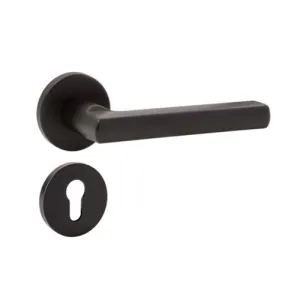
Разделенный замок для деревянной двери
Их классификация: Механические замкимнения: 36номер:Время выпуска: 2025-10-30 16:35:41Деревянный дверной замок по-прежнему очень безопасен, так что не волнуйтесь! Я считаю, что расколный замок Timber безопаснее старых замков! Потому что старые замки обычно представляют собой механические замки.Этот тип очень легко открыть, но для раскола деревянной двери необходимо использование научных технологий. Если вы хотите открыть расколный замок на деревянной двери, вам действительно нужны более высокие технологии, поэтому расколный замок из дерева безопасен.Но выбирая сплит-замок Timber, нам также следует быть осторожными и не выбирать некачественные бренды, поскольку это определенно н...
новости
классификация:
Нет результатов поиска!
случай
классификация:
Нет результатов поиска!
видео
классификация:
Нет результатов поиска!
скачать
классификация:
Нет результатов поиска!
вербовка
классификация:
Нет результатов поиска!
Рекомендуемые продукты
Нет результатов поиска!



 телефон